

Prince Zill al–Sultan Melon fruit
-
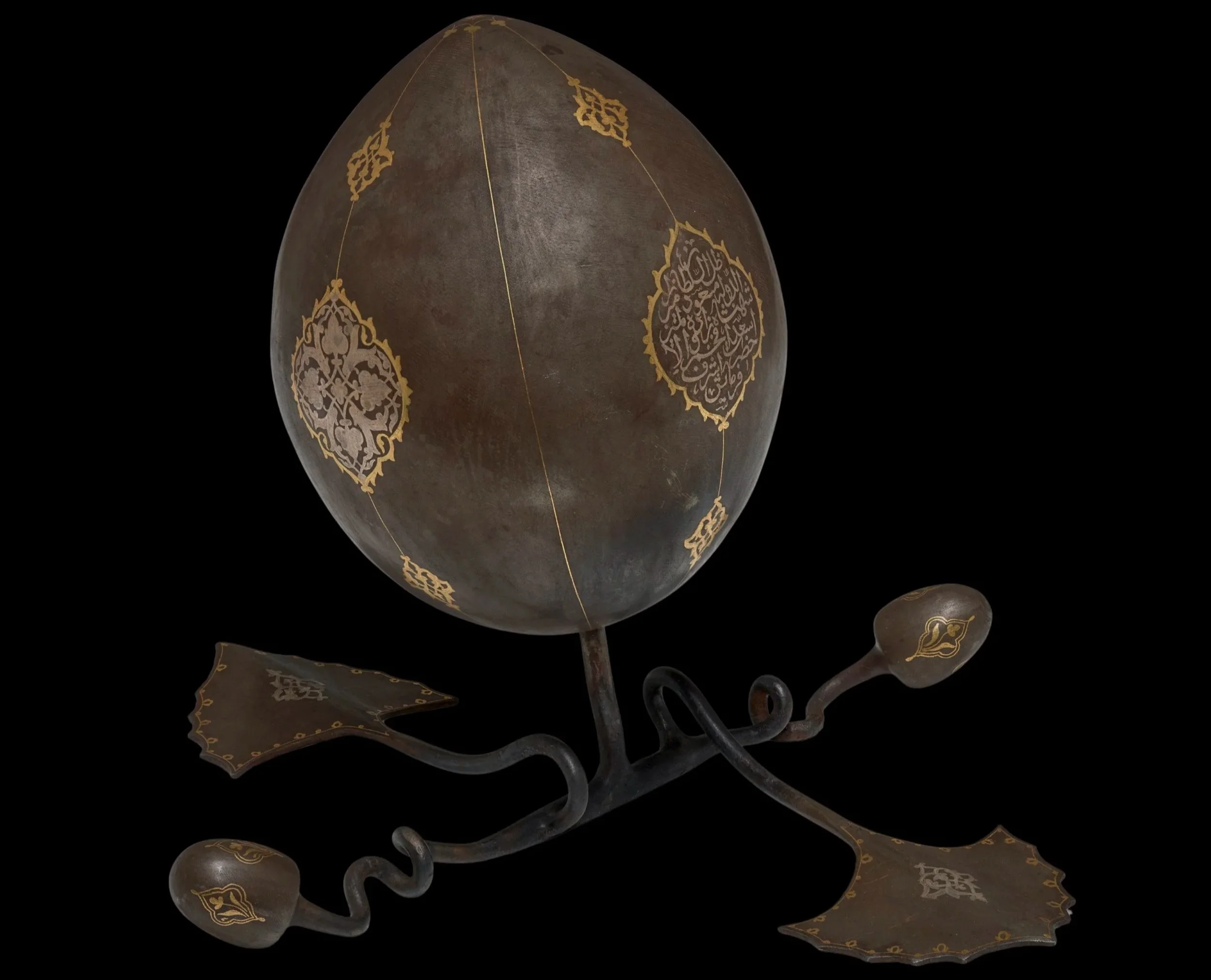
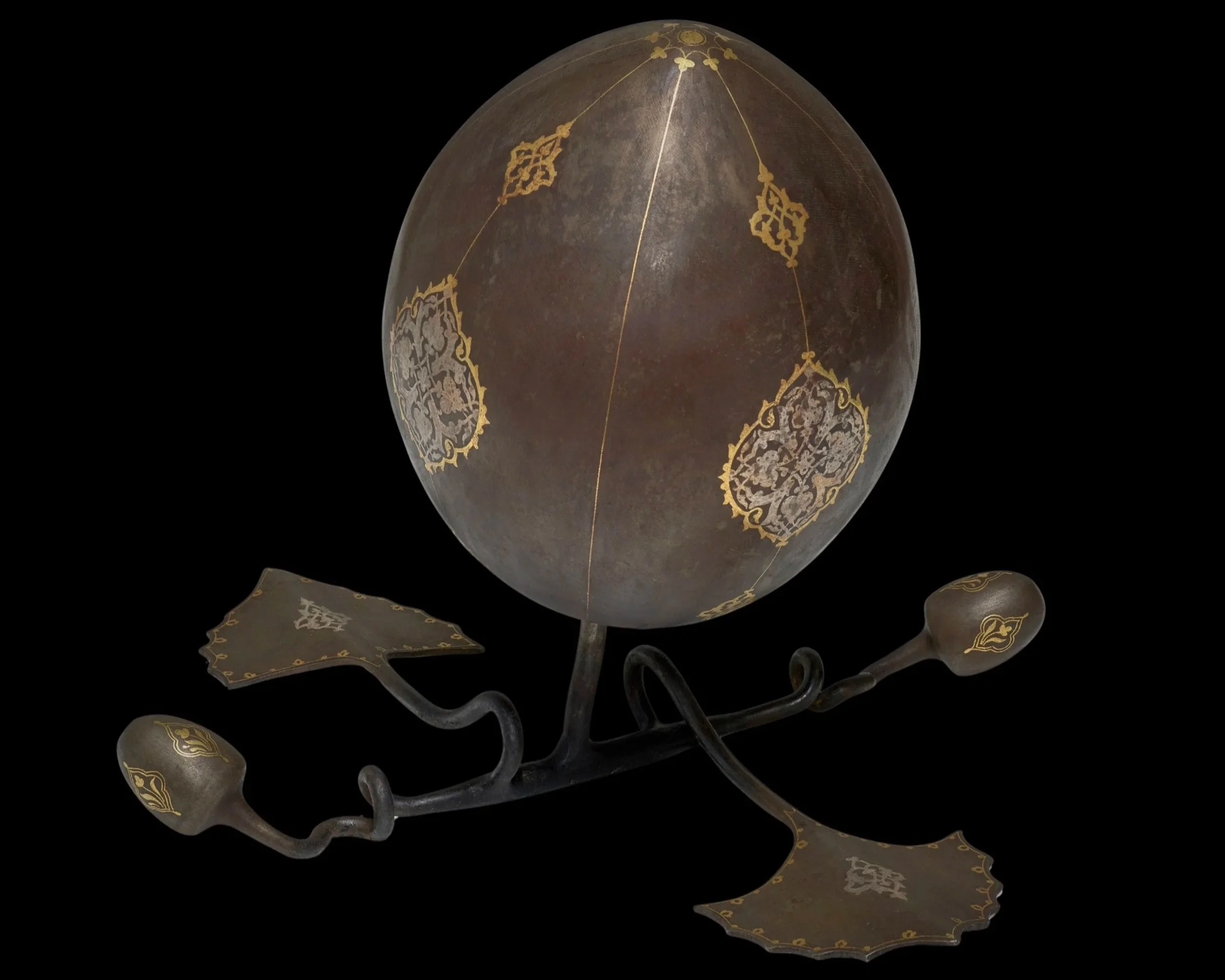
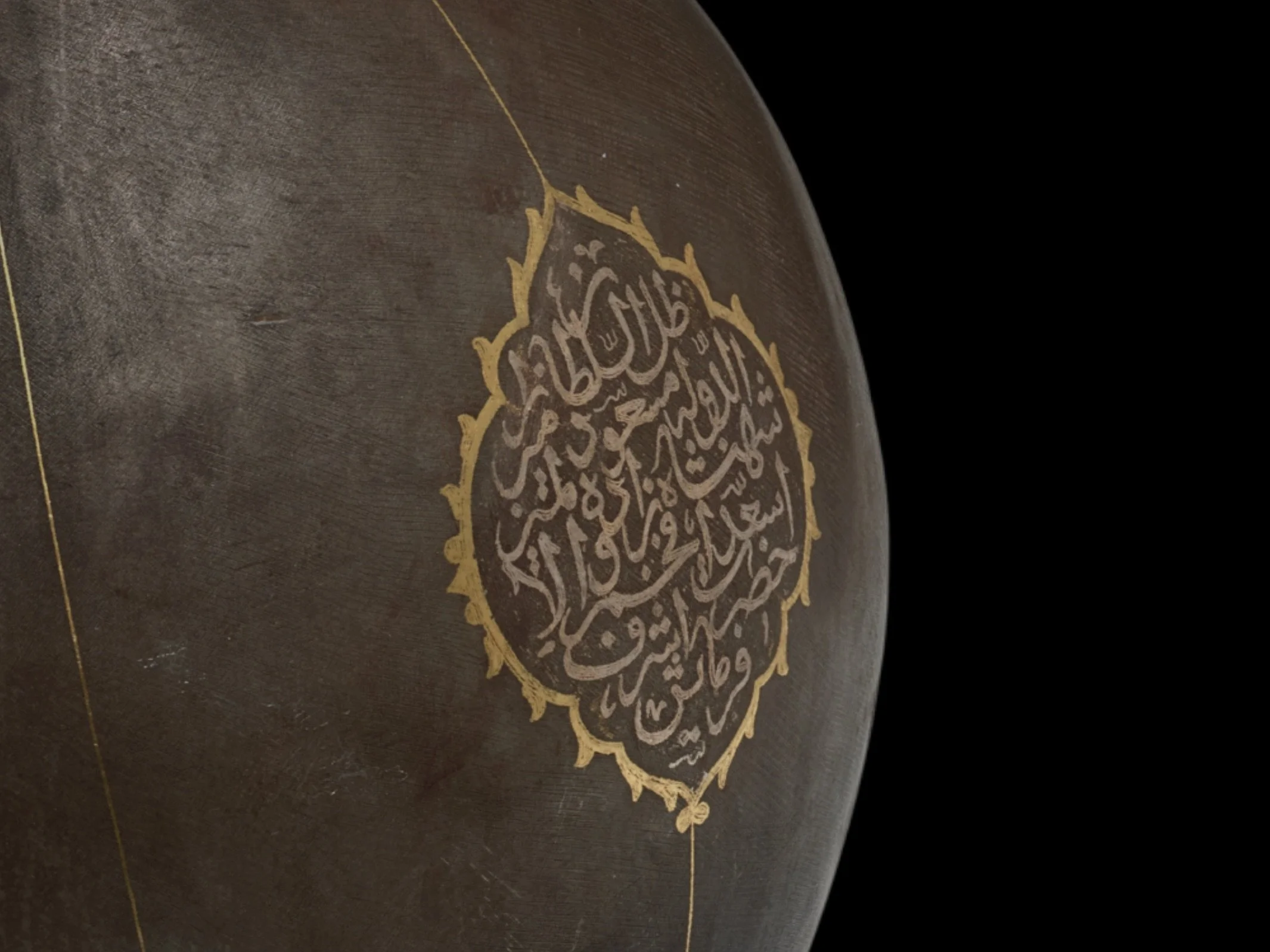
Prince Zill al–Sultan melon fruit in steel with koftgari decoration in gold and silver thread. Ovoid shape on a tendril stem and leaves, featuring four cartouches, three ornamental and one calligraphic.
Qajar dynasty, Iran. Royal Workshops of Isfahan c. 1872–1896 AD
Height: 28 cm
-
The naturalistic representation of fruit in steel constitutes a distinctive and technically virtuosic genre within the renaissance of Persian metalwork during the Qajar dynasty (1789–1925). This piece, which reproduces the morphology of a melon (Cucumis melo) resting on a complex stem of steel tendrils and leaves, exemplifies the transition of the metal arts towards a purely symbolic, palatial and status-displaying purpose.
The surface of the ovoid body stands out for its refined decoration using the damascening or koftgari technique, which consists of inlaying gold and silver threads onto a textured steel base. The ornamental design features a central cartouche of exceptional historical importance, displaying complex intertwined Thuluth calligraphy that identifies the patron as Prince Mas'ud Mirza, known by the title Zill al-Sultan (‘Shadow of the Sultan’). The inscription includes the full imperial protocol, highlighting the epithet Shahanshah-zadah (‘Son of the King of Kings’), which links the piece directly to the lineage of Naser al-Din Shah and allows it to be accurately dated between 1872 and 1896.
Traditionally, historiography linked these steel fruits to the finials of processional banners (‘alam) – however, the specific morphology of this work, with its integral support featuring secondary shoots and serrated leaves, confirms its conception as an autonomous work of art. These objects were intended for display in palatial settings—probably in the court of Isfahan, the centre of Mas'ud Mirza's patronage—as symbols of abundance and technical sophistication. Another theory suggests that similar pieces were commissioned as diplomatic gifts symbolising the power and refinement of the Qajar court.
The technical execution and the presence of the royal calligraphic seal place this piece on a par with examples held in leading Islamic art collections, such as the Victoria & Albert Museum, the Metropolitan Museum of Art and the Reza Abbasi Museum. These museums hold pieces that share this same decorative syntax, but few have such a direct attribution to the governor of Isfahan, which gives this piece greater historical and documentary value.
-
The artwork displays an irregular patina characteristic of its age. A team of professional restorers has worked on welding one of the leaves, using the same original technique with brass and a blowtorch.
Price on request