

Panel of Three Arista Tiles
-
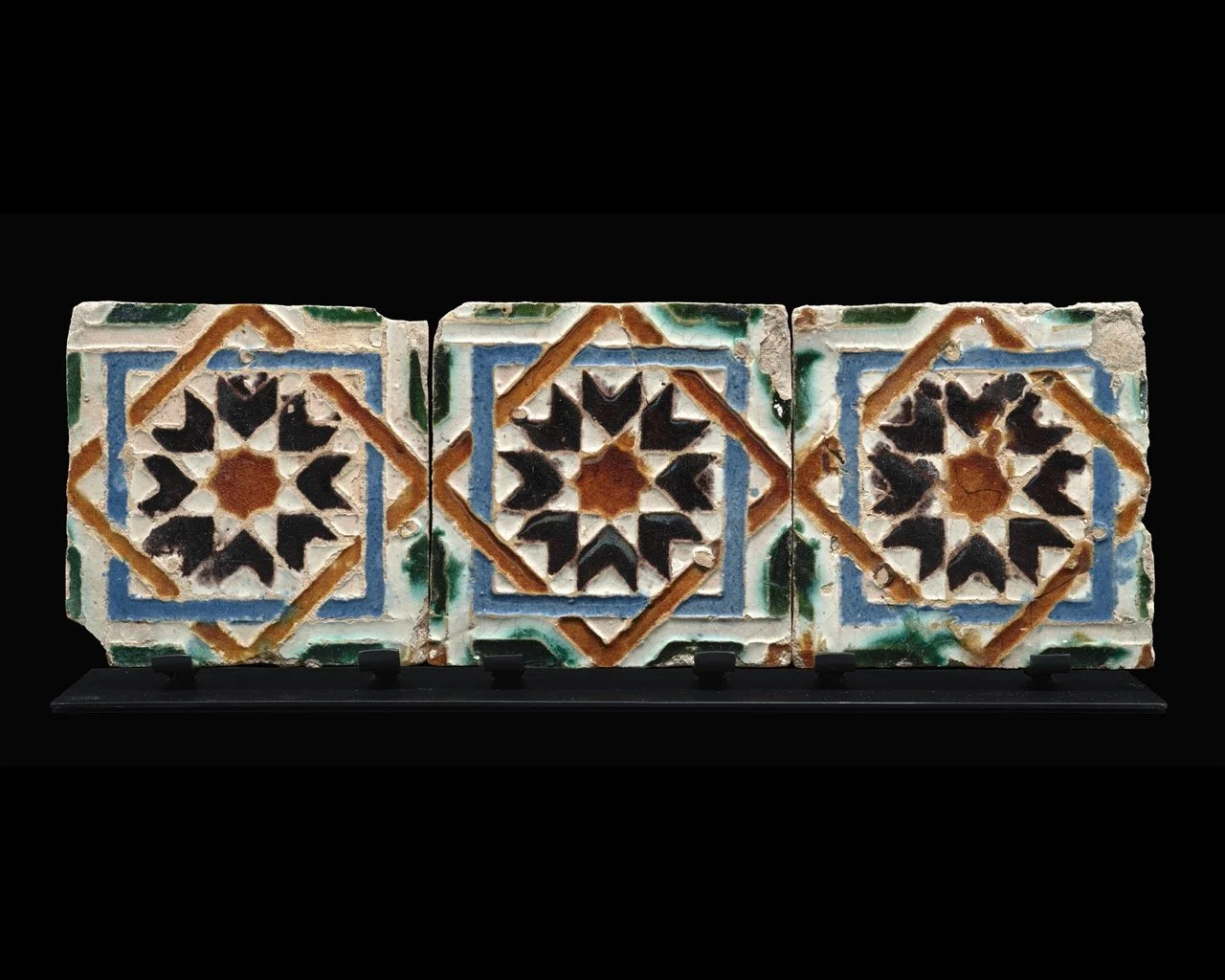
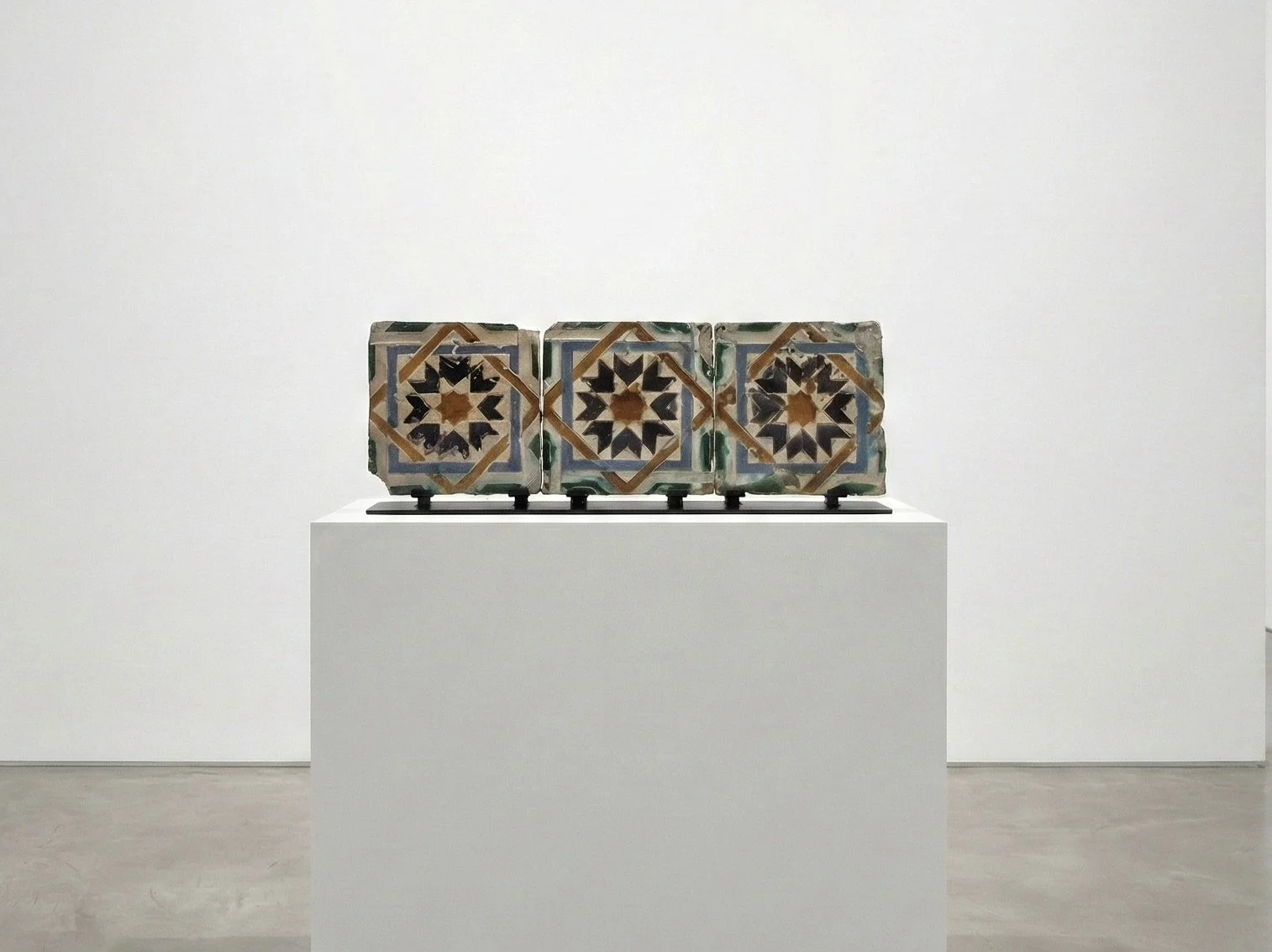
Panel of three glazed arista tiles, decorated with interlacing patterns depicting eight-pointed stars
Sevilla, Spain, early 16th century
Height: 13 cm Width: 39 cm
-
This panel, composed of three arista tiles, is a magnificent representation of the golden age of Sevillian pottery in the 16th century. The piece documents the survival and adaptation of Andalusian geometric aesthetics within the decorative programmes of civil and religious architecture in modern Spain, in the midst of the transition to the Renaissance.
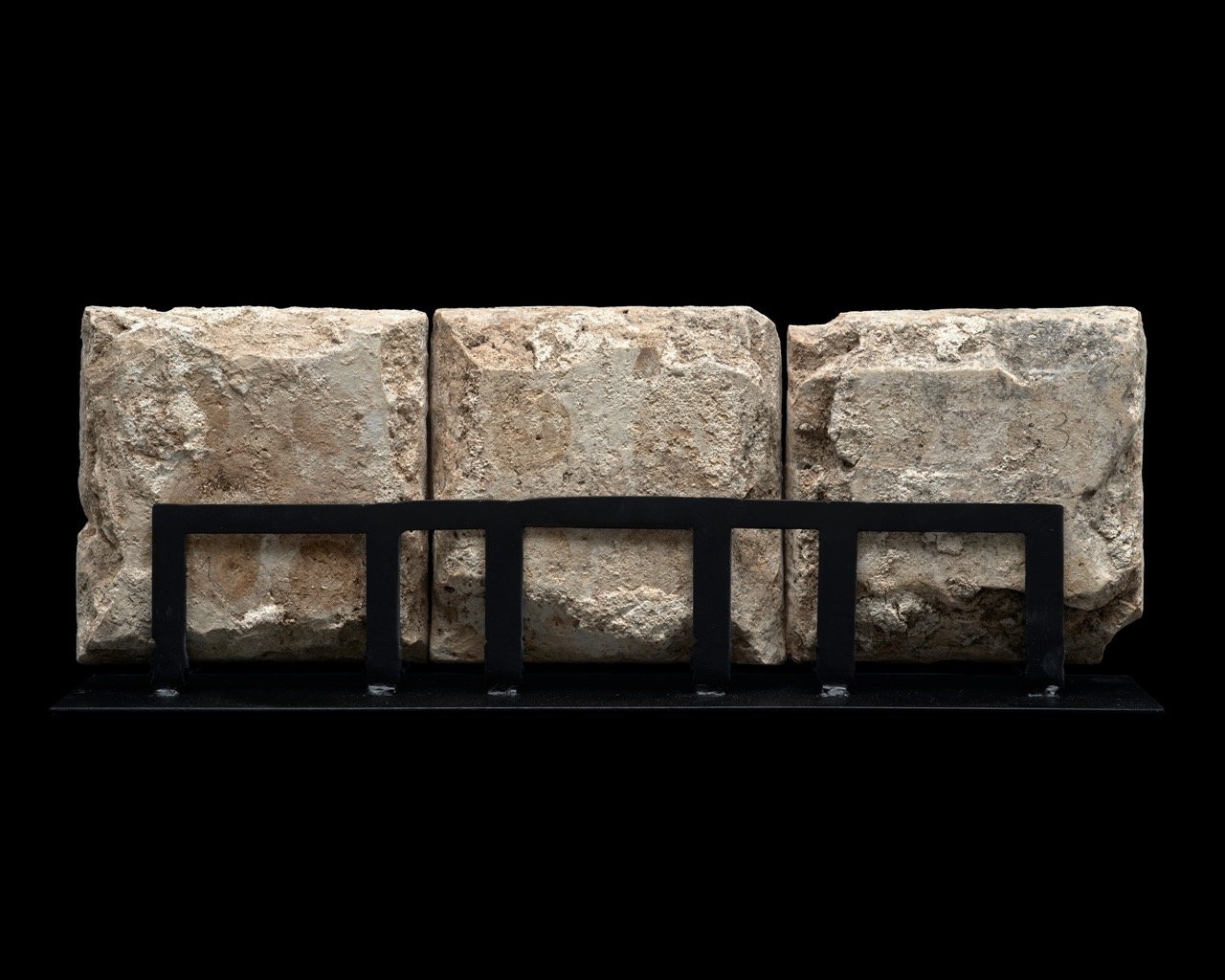
The tiles are made using the cuenca or arista technique, a method of production that revolutionised architectural ceramics in the 15th and 16th centuries, replacing the laborious technique of tiling. The process consisted of stamping a wooden or metal mould onto the still-plastic clay, creating a relief of small ridges or partitions. These ridges served as a physical barrier to prevent the melted glazes of different colours from mixing during firing in the kiln. The natural colour of the fired clay and the depth of these ‘basins’ can be clearly seen on the edges and in the hollows of this panel.
The production of these tiles was concentrated almost exclusively in the potteries of the Triana district of Seville, which during the 16th century monopolised the export of architectural ceramics to both the Iberian Peninsula and the New World. This type of modular design was mainly used to form large baseboards in courtyards, staircases and chapels, providing not only insulation against moisture, but also a rich visual display.
The design features a modular pattern of geometric interlacing, with an eight-pointed star inscribed in a square frame as the central motif. The diagonal bands crossing the corners are designed to connect with adjacent tiles, creating an infinite tapestry or network when covering an entire wall.
There are panels with identical designs or direct variations of this ‘eight-spoke wheel’ preserved in situ in the most emblematic monuments of Andalusian civil and religious architecture. Similar patterns can be found covering the baseboards of the Reales Alcázares in Seville, the Casa de Pilatos, the Palacio de las Dueñas and the Monastery of San Isidoro del Campo in Santiponce. Likewise, individual pieces of identical workmanship appear in the collections of the Museum of Popular Arts and Traditions in Seville, the National Museum of Decorative Arts in Madrid and the Hispanic Society of America in New York.
-
The tiles show a patina corresponding to their age. The internal craquelure in the glaze is due to the expansion and contraction processes of the clay and glaze. Some ‘bubbles’ can be seen, which are the result of the firing process. There is also minor wear on the front of the pieces. All these characteristics should not be considered defects, but rather genuine elements that demonstrate the age and originality of the panel.
Price on request