
 Image 1 of 1
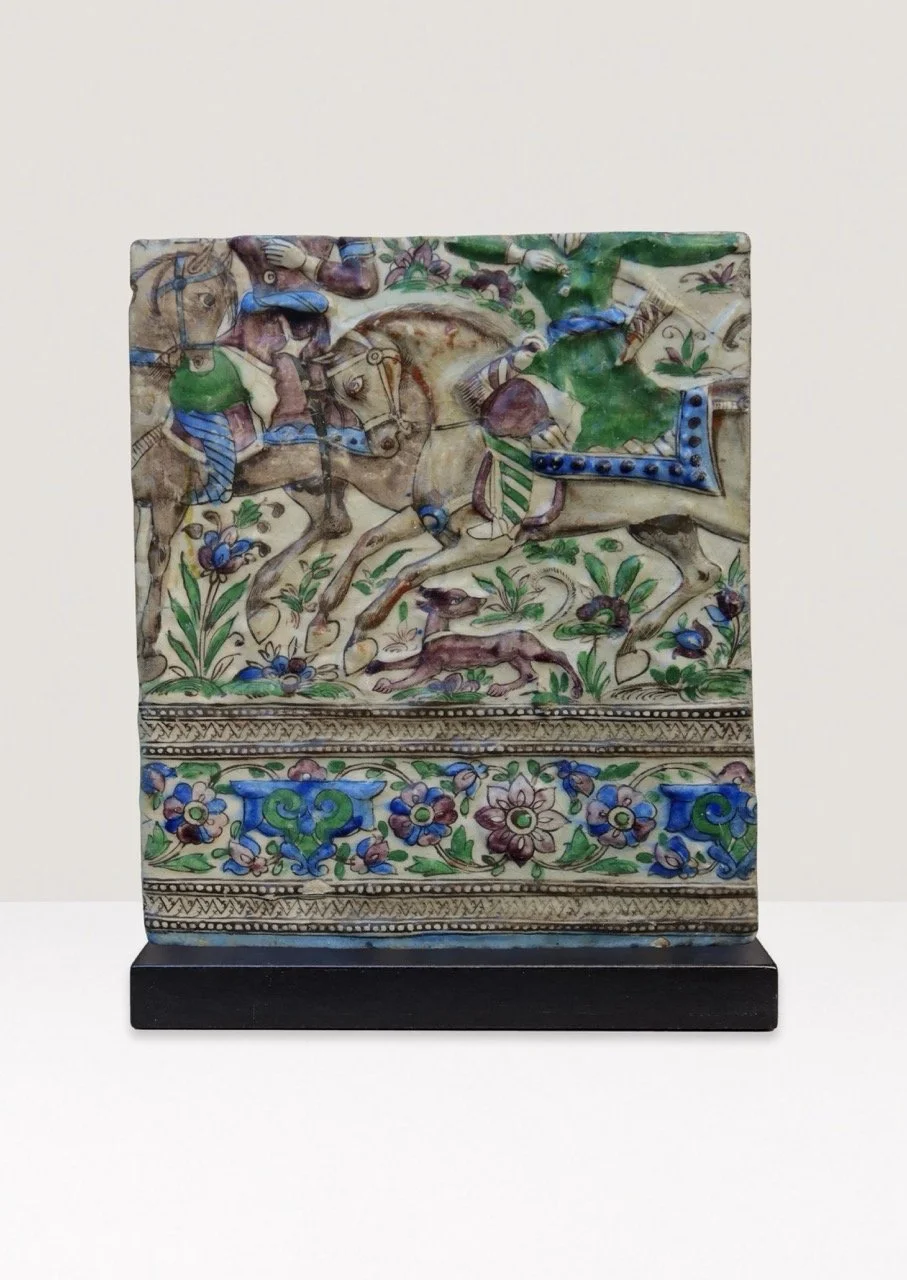
A monumental Qajar moulded and glazed ceramic tile, part of an architectural panel depicting a hunting scene
Iran, possibly Tehran. c. 1850
Height: 35,5 cm Width: 31,5 cm (Framed – Height: 46,5 cm Width 42 cm)
Additional Information
This monumental tile, dating from the mid-19th century, reflects the refined artistic repertoire of the Qajar dynasty, a period in which Persian ceramics experienced an aesthetic and technical renaissance. Possibly originating in Tehran the panel depicts a scene of equestrian hunting, a theme deeply rooted in Iranian court iconography since Sasanian times.
The moulded relief and vivid palette of blues, greens, whites and browns, enhanced by a transparent glaze, demonstrate the Qajar mastery of combining technique and narrative. The composition reflects both the visual dynamism characteristic of Qajar painting and a taste for meticulous ornamentation. In the lower band, a floral register with symmetrical and repetitive motifs adds balance and harmony to the whole, evoking the Persian tradition of integrating nature and figure on the same decorative surface.
Hunting in Persian tradition was more than just a recreational activity; it was a symbol of power, nobility and dominion over the natural order. From Safavid miniatures to Qajar murals, hunting scenes extolled the monarch's skill and courage, while also alluding to an ideal of harmony between the sovereign and his environment. This tile, designed to decorate the walls of a palace or aristocratic residence, translates that symbolic legacy into an accessible and deeply ornamental visual language.
Provenance
Private collection, New York, United States.
A monumental Qajar moulded and glazed ceramic tile, part of an architectural panel depicting a hunting scene
Iran, possibly Tehran. c. 1850
Height: 35,5 cm Width: 31,5 cm (Framed – Height: 46,5 cm Width 42 cm)
Additional Information
This monumental tile, dating from the mid-19th century, reflects the refined artistic repertoire of the Qajar dynasty, a period in which Persian ceramics experienced an aesthetic and technical renaissance. Possibly originating in Tehran the panel depicts a scene of equestrian hunting, a theme deeply rooted in Iranian court iconography since Sasanian times.
The moulded relief and vivid palette of blues, greens, whites and browns, enhanced by a transparent glaze, demonstrate the Qajar mastery of combining technique and narrative. The composition reflects both the visual dynamism characteristic of Qajar painting and a taste for meticulous ornamentation. In the lower band, a floral register with symmetrical and repetitive motifs adds balance and harmony to the whole, evoking the Persian tradition of integrating nature and figure on the same decorative surface.
Hunting in Persian tradition was more than just a recreational activity; it was a symbol of power, nobility and dominion over the natural order. From Safavid miniatures to Qajar murals, hunting scenes extolled the monarch's skill and courage, while also alluding to an ideal of harmony between the sovereign and his environment. This tile, designed to decorate the walls of a palace or aristocratic residence, translates that symbolic legacy into an accessible and deeply ornamental visual language.
Provenance
Private collection, New York, United States.