
 Image 1 of 3
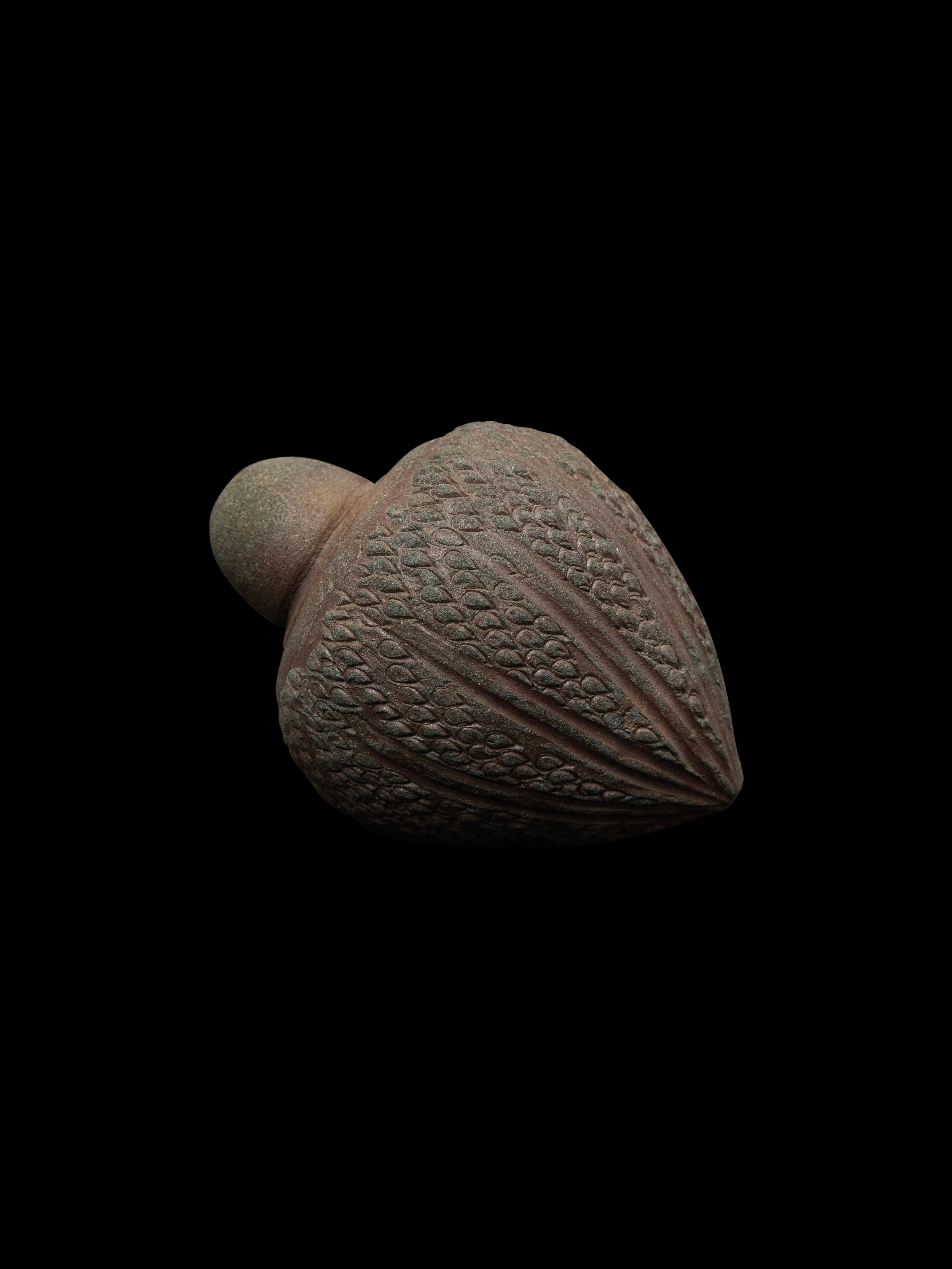 Image 2 of 3
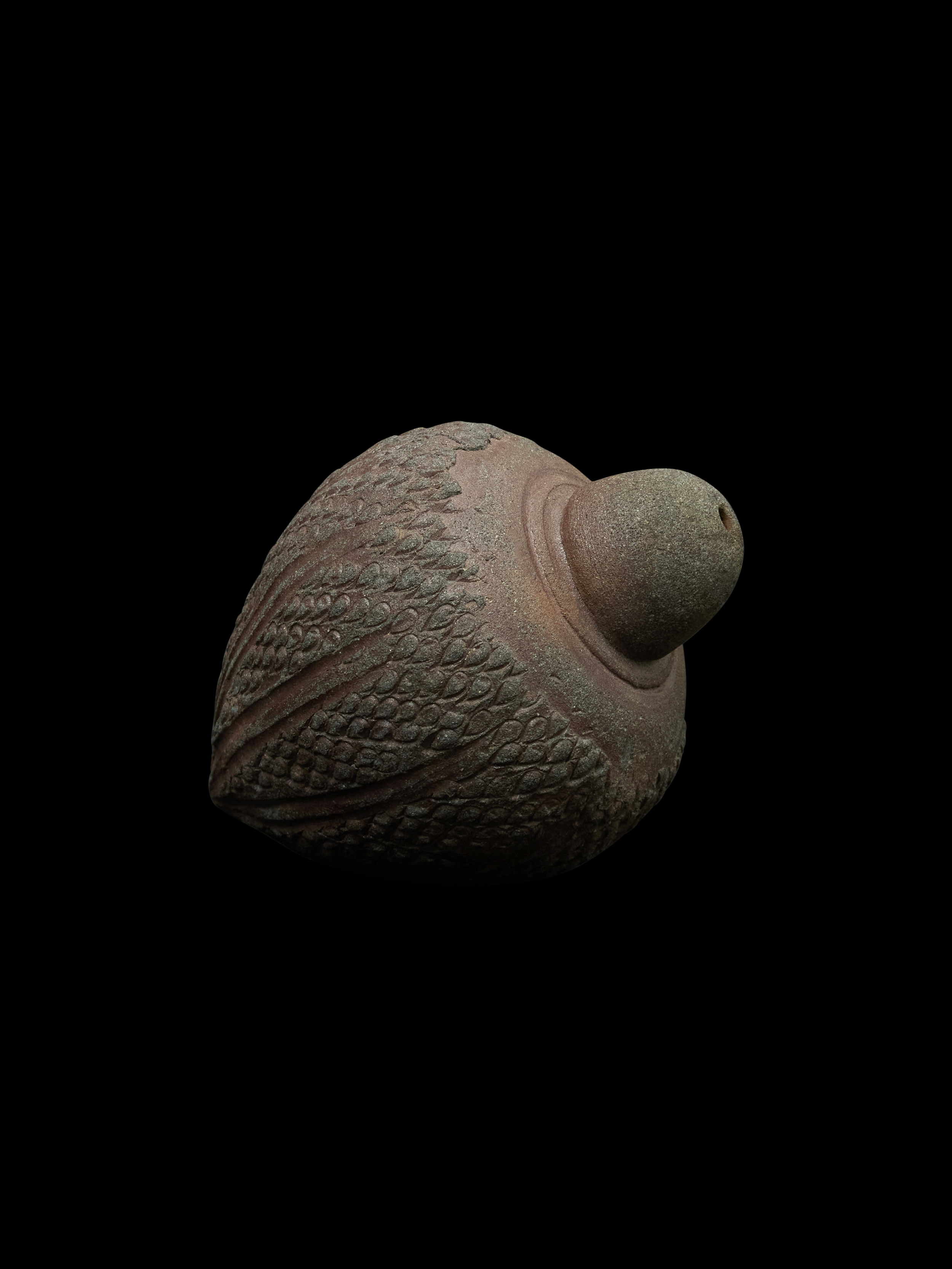 Image 3 of 3
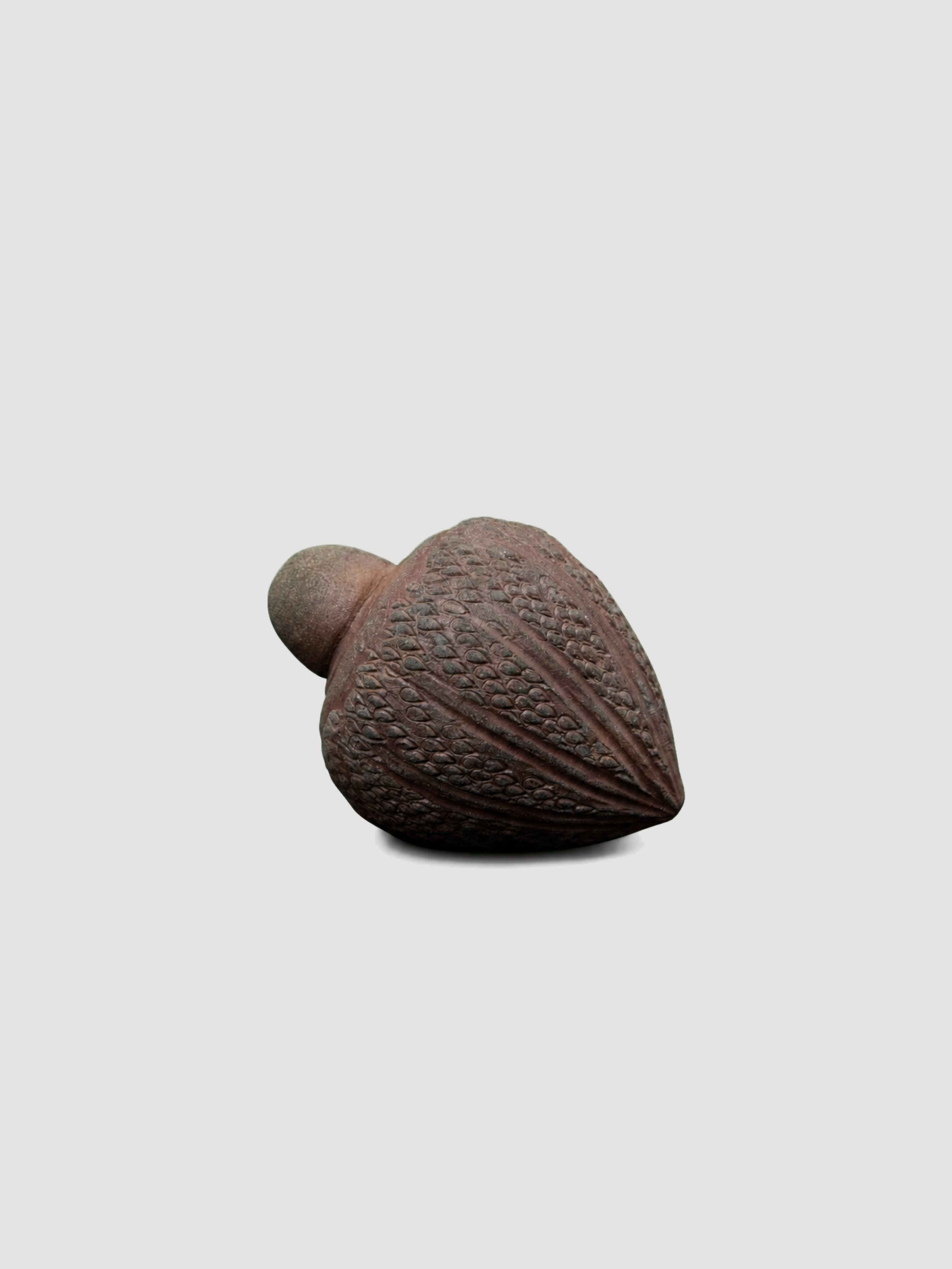
A Fatimid vitrified pottery hand–grenade, in spherical-conical shape with intricate scaly pattern on its surface
Fatimid Egypt. 10th or 11th century
Height: 12,8 cm (5 in) Width: 9,5 cm (3.7 in)
Additional Information
Spherical-conical ceramic pieces constitute a widely documented typological group in Islamic archaeological contexts between the 9th and 13th centuries, with numerous finds in Egypt, Syria, Palestine, and Iraq. Their morphology—an ovoid body with a conical base and narrow neck—has led to various functional interpretations. Traditionally, they were considered utilitarian vessels for precious liquids, perfumes or medicines; however, recent studies of chemical residues have identified flammable compounds in some specimens, reinforcing the hypothesis of their use as incendiary grenades filled with naphtha. This theory is particularly reinforced by the warlike context of the Fatimid dynasty during the wars against Byzantium and the Crusader, Abbasid, Seljuk and other Sunni and dissident Shiite adversaries.
Other examples with similar characteristics have been found in excavations in the ancient city of Fustat, now Cairo, suggesting that this piece may have been made in the surrounding area.
Similar artefacts can be found in prominent collections of Islamic archaeology and art, such as the Victoria & Albert Museum, the Museum of Islamic Ceramics in Cairo, the Los Angeles County Museum of Art (LACMA), the Royal Ontario Museum in Toronto, the Ajlun Archaeological Museum in Jordan and others.
Provenance
Important private collection of medieval Islamic art, Switzerland.
Acquired in the mid-20th century through the European art market.
A Fatimid vitrified pottery hand–grenade, in spherical-conical shape with intricate scaly pattern on its surface
Fatimid Egypt. 10th or 11th century
Height: 12,8 cm (5 in) Width: 9,5 cm (3.7 in)
Additional Information
Spherical-conical ceramic pieces constitute a widely documented typological group in Islamic archaeological contexts between the 9th and 13th centuries, with numerous finds in Egypt, Syria, Palestine, and Iraq. Their morphology—an ovoid body with a conical base and narrow neck—has led to various functional interpretations. Traditionally, they were considered utilitarian vessels for precious liquids, perfumes or medicines; however, recent studies of chemical residues have identified flammable compounds in some specimens, reinforcing the hypothesis of their use as incendiary grenades filled with naphtha. This theory is particularly reinforced by the warlike context of the Fatimid dynasty during the wars against Byzantium and the Crusader, Abbasid, Seljuk and other Sunni and dissident Shiite adversaries.
Other examples with similar characteristics have been found in excavations in the ancient city of Fustat, now Cairo, suggesting that this piece may have been made in the surrounding area.
Similar artefacts can be found in prominent collections of Islamic archaeology and art, such as the Victoria & Albert Museum, the Museum of Islamic Ceramics in Cairo, the Los Angeles County Museum of Art (LACMA), the Royal Ontario Museum in Toronto, the Ajlun Archaeological Museum in Jordan and others.
Provenance
Important private collection of medieval Islamic art, Switzerland.
Acquired in the mid-20th century through the European art market.