
 Image 1 of 3
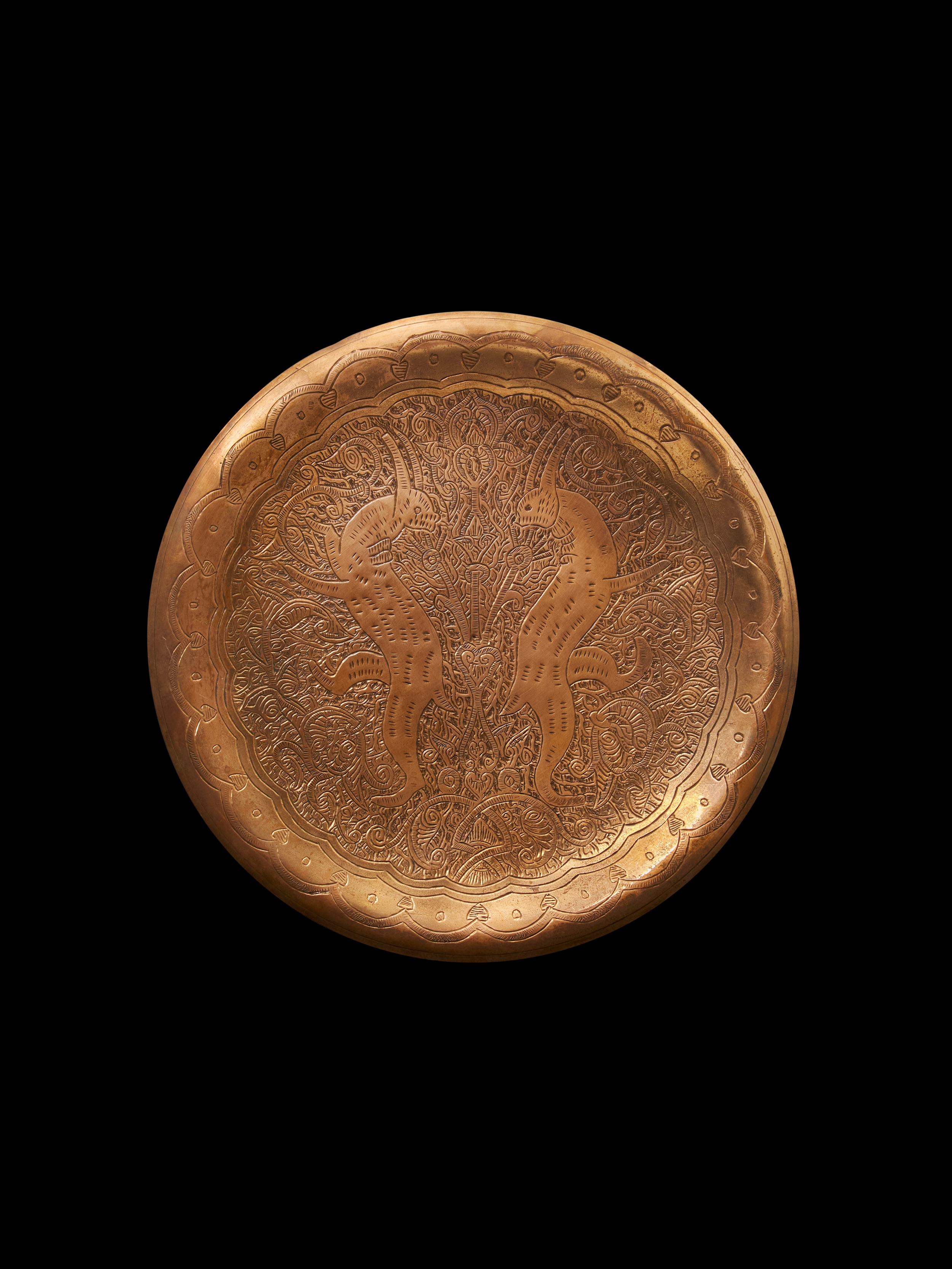 Image 2 of 3
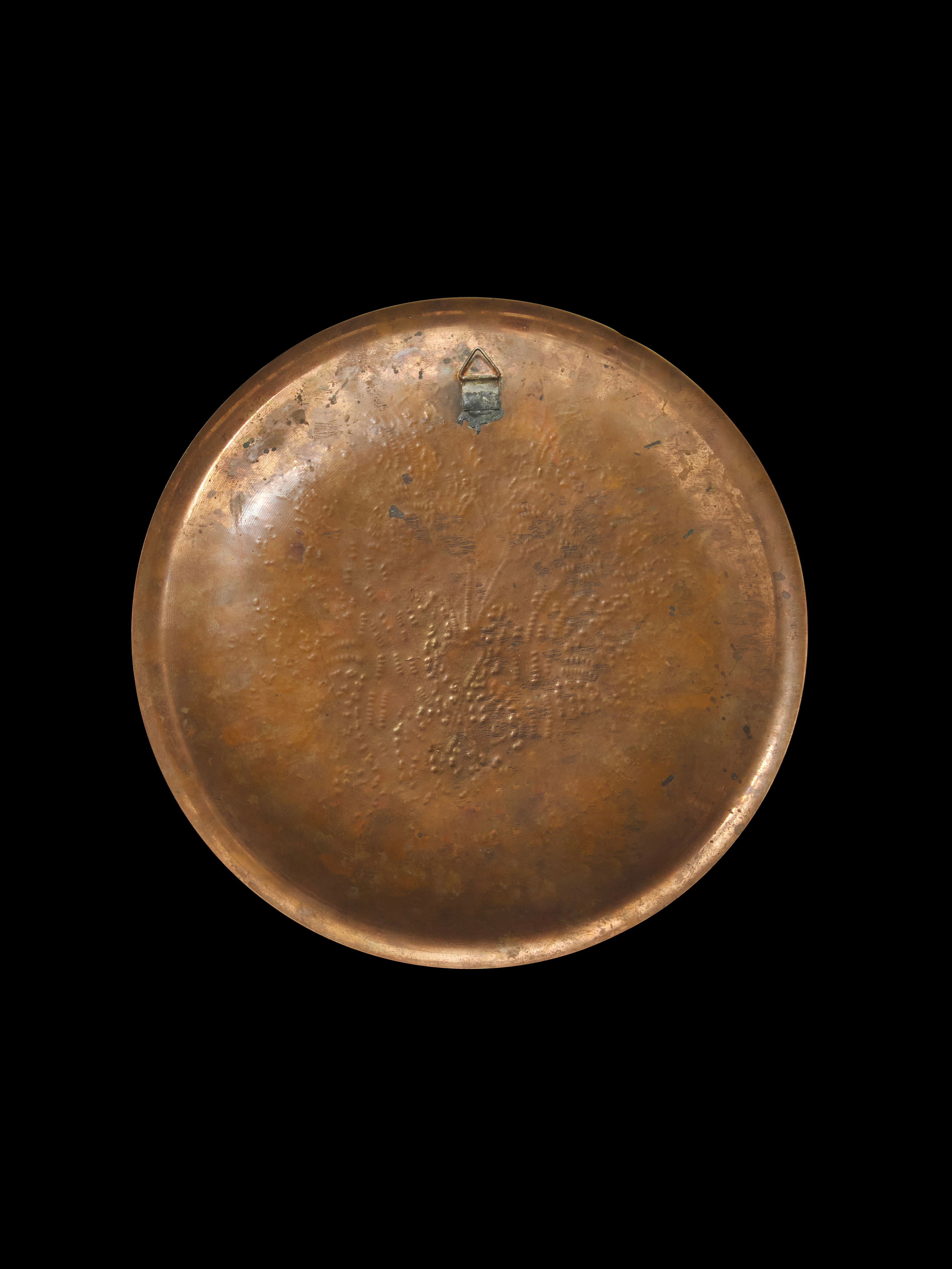 Image 3 of 3
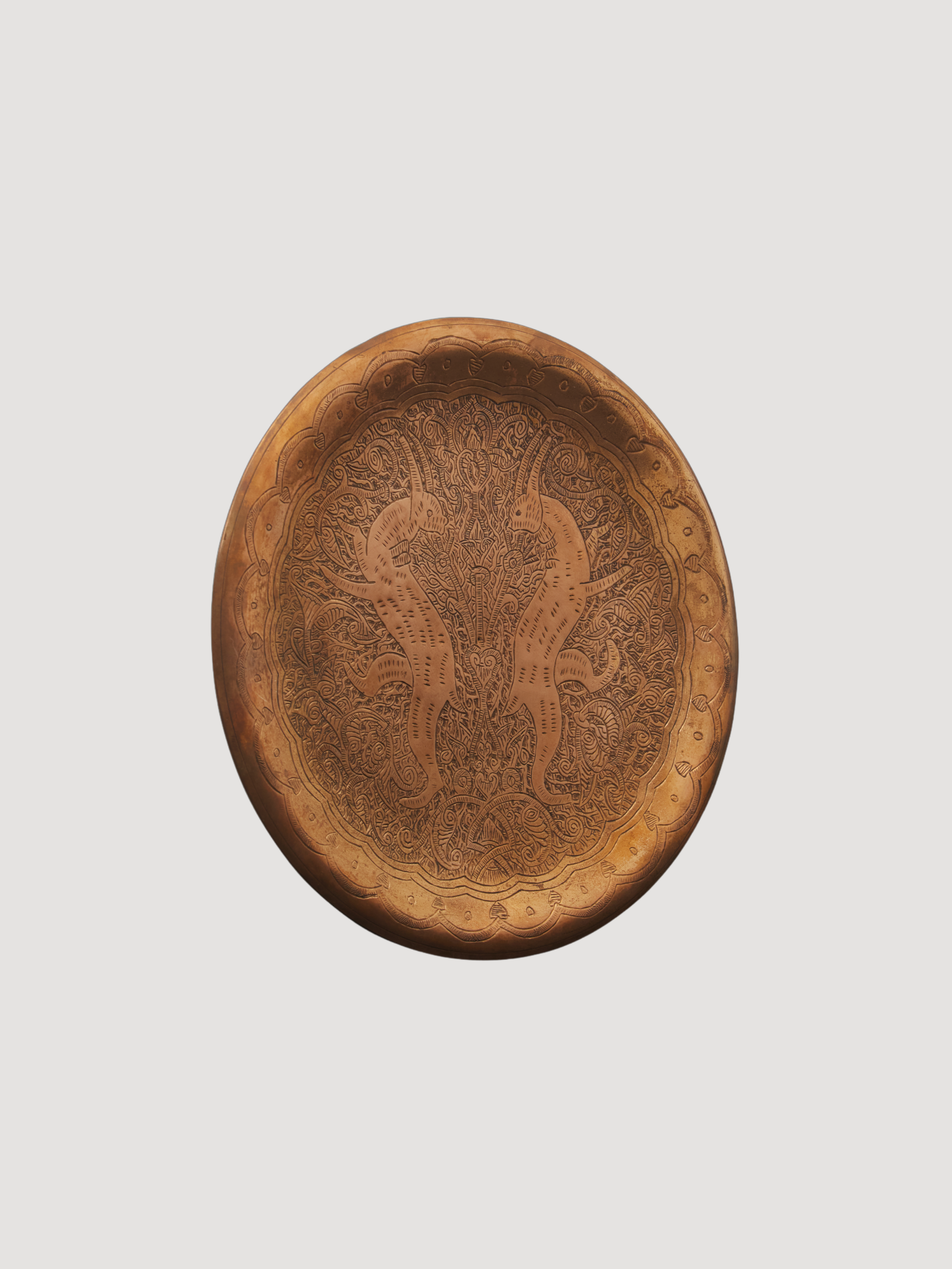
A Mamluk Revival Charger depicting Confronted Animals
In chased and engraved copper, of circular form with a wide flat well and a lobed, scalloped rim. The central medallion depicts two confronted gazelles, set against a dense background of foliate scrolls and arabesques.
Cairo, Egypt. Late 19th century.
Diameter: 30 cm (11.81 in)
Additional Information
While the technical execution of this dish belongs to the late 19th-century Cairene workshops, its soul is deeply rooted in the Fatimid period (10th–12th centuries). Unlike later Islamic periods that favored pure geometry, the Fatimid era was famous for its vibrant use of animals and figures.
This piece moves beyond the personal scale and enters the realm of display metalwork. The larger diameter allowed the master coppersmith to showcase a more complex narrative than in smaller pieces. The scalloped, lobed rim is a particularly difficult feature to execute, requiring careful hammering to ensure perfect symmetry. Combined with the rich, honey-toned patina, this dish stands as a premier example of how 19th-century Egyptian craftsmen elevated copper to a medium of high artistic expression.
Provenance
Private Collection, Cairo, Egypt.
A Mamluk Revival Charger depicting Confronted Animals
In chased and engraved copper, of circular form with a wide flat well and a lobed, scalloped rim. The central medallion depicts two confronted gazelles, set against a dense background of foliate scrolls and arabesques.
Cairo, Egypt. Late 19th century.
Diameter: 30 cm (11.81 in)
Additional Information
While the technical execution of this dish belongs to the late 19th-century Cairene workshops, its soul is deeply rooted in the Fatimid period (10th–12th centuries). Unlike later Islamic periods that favored pure geometry, the Fatimid era was famous for its vibrant use of animals and figures.
This piece moves beyond the personal scale and enters the realm of display metalwork. The larger diameter allowed the master coppersmith to showcase a more complex narrative than in smaller pieces. The scalloped, lobed rim is a particularly difficult feature to execute, requiring careful hammering to ensure perfect symmetry. Combined with the rich, honey-toned patina, this dish stands as a premier example of how 19th-century Egyptian craftsmen elevated copper to a medium of high artistic expression.
Provenance
Private Collection, Cairo, Egypt.