
 Image 1 of 1
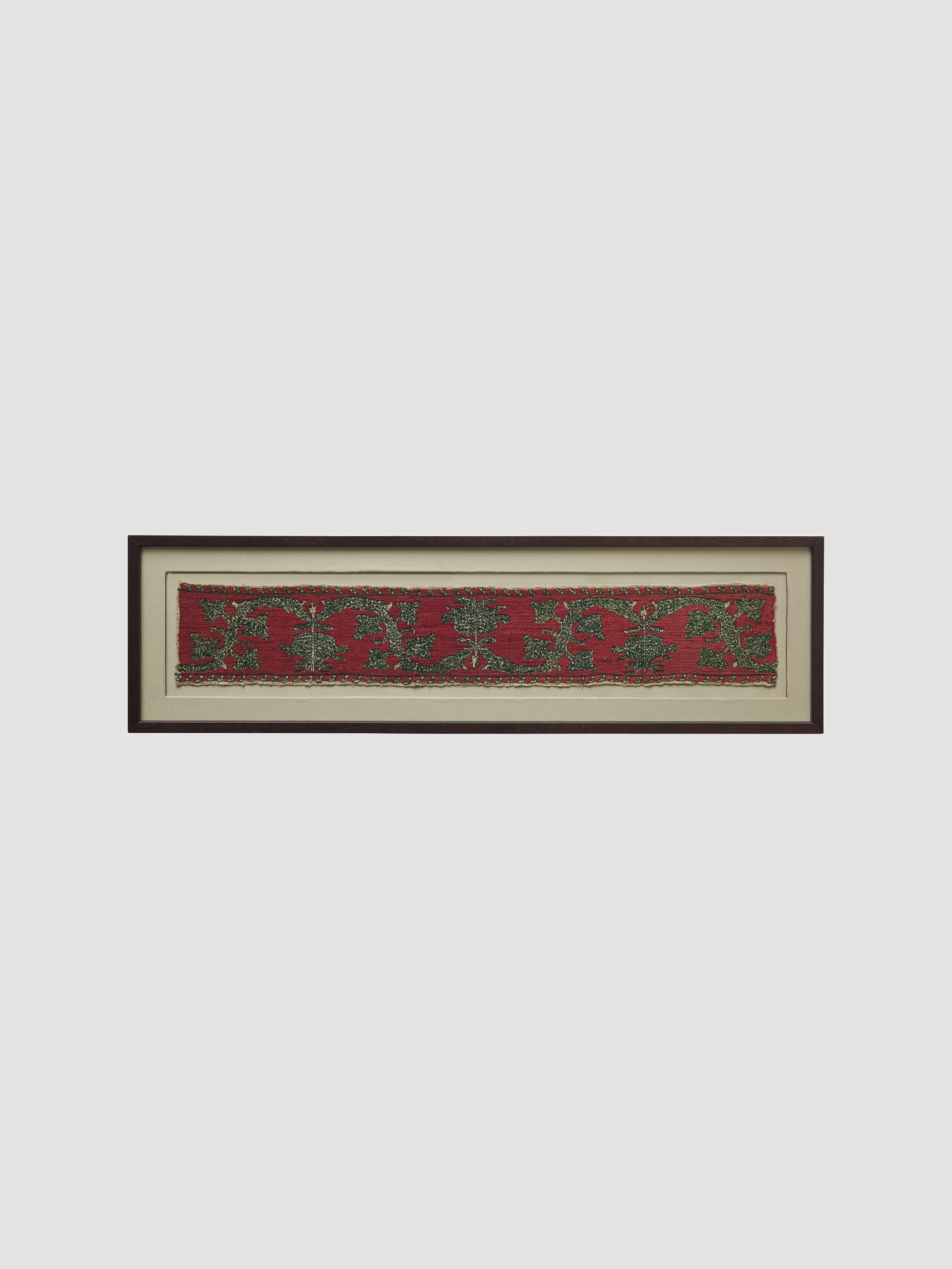
An Azemmour silk-on-linen embroidery depicting pomegranates and floral motifs
Azemmour, Morocco. Second half 18th century.
Height: 12 cm Width: 76 cm (Framed – Height: 25 cm Width: 89 cm)
Additional Information
In this 18th-century embroidery, the pomegranate serves as a central iconographic pillar. Across the Mediterranean and the Islamic world, the pomegranate has long been a potent symbol of fertility and abundance. In the context of Moroccan bridal textiles, such as those from Azemmour, this motif was intended to bring baraka (blessings) to a new household. The way the fruit is stylized—bursting with seeds represented by the void of the linen—is a testament to the artisan's ability to blend deep symbolism with complex textile geometry.
Unlike 19th-century examples which often show more linen, this 18th-century frieze is saturated with high-twist silk, creating a rich, textile relief that mimics the appearance of fine tapestry or lace. The red and green palette, obtained from natural dyes, has aged into a sophisticated deep madder tone. This level of precision required the embroiderer to follow a strict thread-count on the linen base, ensuring that the complex curves of the pomegranates remained perfectly symmetrical.
Provenance
Private collection, London, United Kingdom.
An Azemmour silk-on-linen embroidery depicting pomegranates and floral motifs
Azemmour, Morocco. Second half 18th century.
Height: 12 cm Width: 76 cm (Framed – Height: 25 cm Width: 89 cm)
Additional Information
In this 18th-century embroidery, the pomegranate serves as a central iconographic pillar. Across the Mediterranean and the Islamic world, the pomegranate has long been a potent symbol of fertility and abundance. In the context of Moroccan bridal textiles, such as those from Azemmour, this motif was intended to bring baraka (blessings) to a new household. The way the fruit is stylized—bursting with seeds represented by the void of the linen—is a testament to the artisan's ability to blend deep symbolism with complex textile geometry.
Unlike 19th-century examples which often show more linen, this 18th-century frieze is saturated with high-twist silk, creating a rich, textile relief that mimics the appearance of fine tapestry or lace. The red and green palette, obtained from natural dyes, has aged into a sophisticated deep madder tone. This level of precision required the embroiderer to follow a strict thread-count on the linen base, ensuring that the complex curves of the pomegranates remained perfectly symmetrical.
Provenance
Private collection, London, United Kingdom.