
 Image 1 of 3
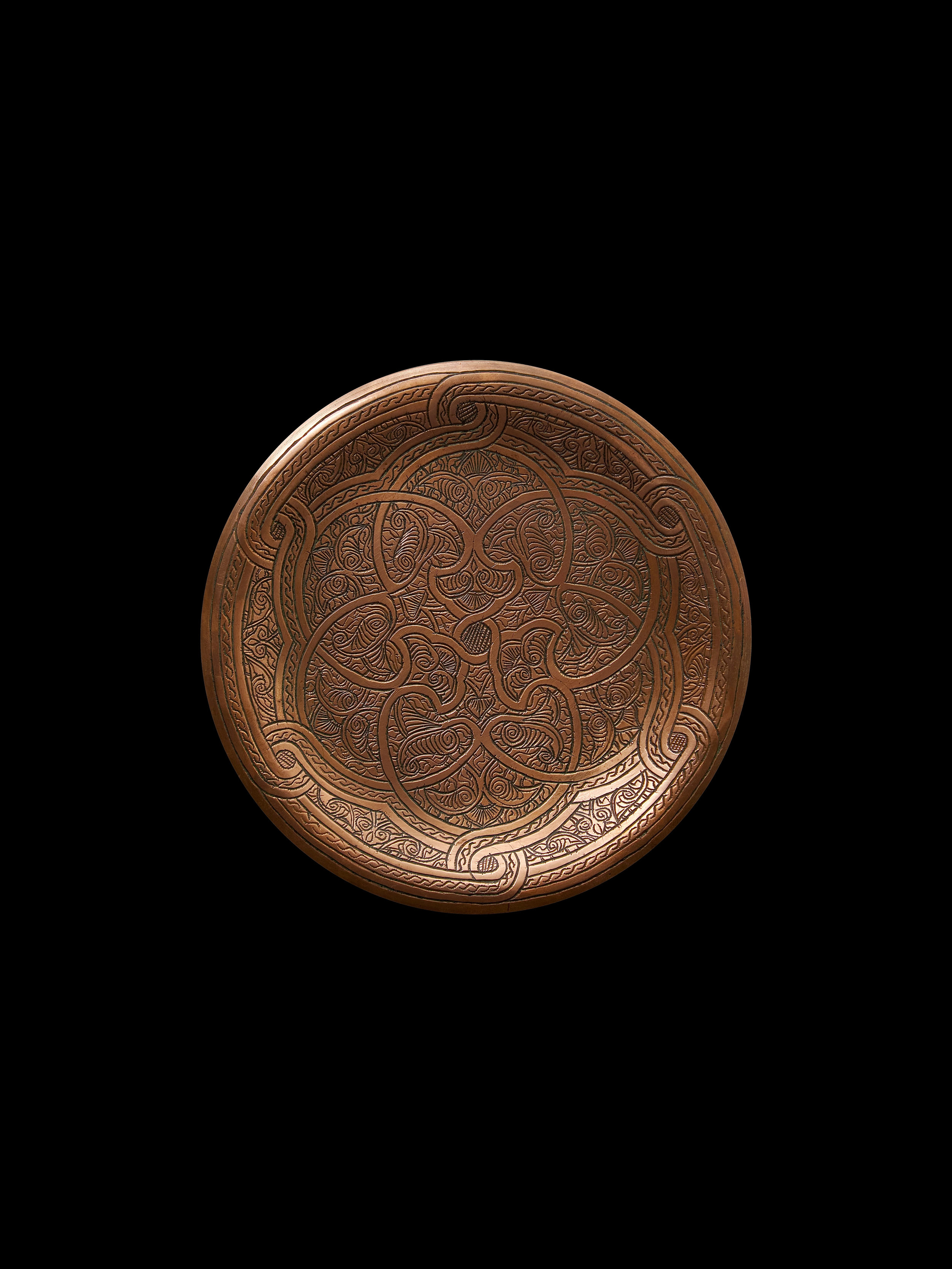 Image 2 of 3
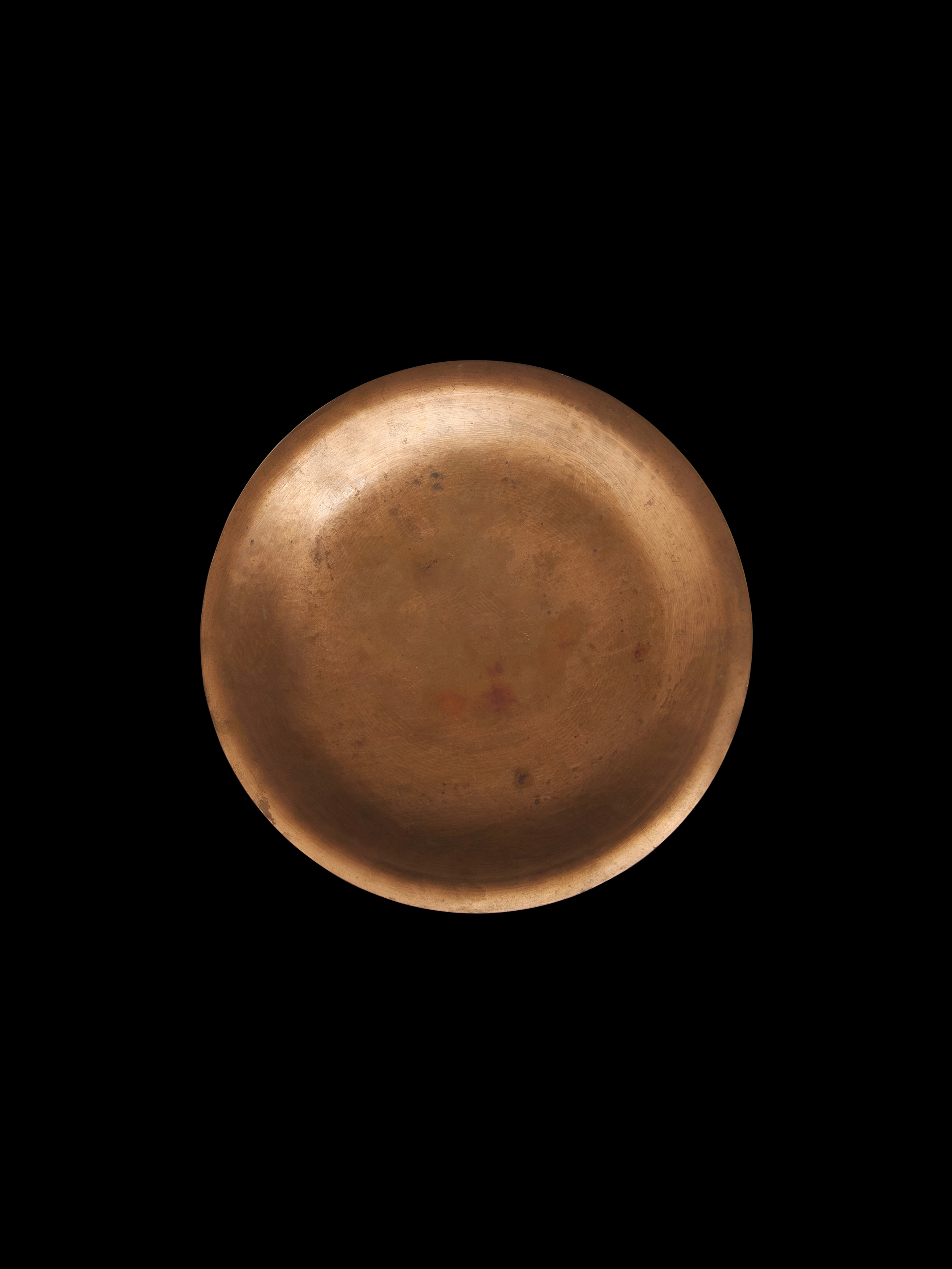 Image 3 of 3
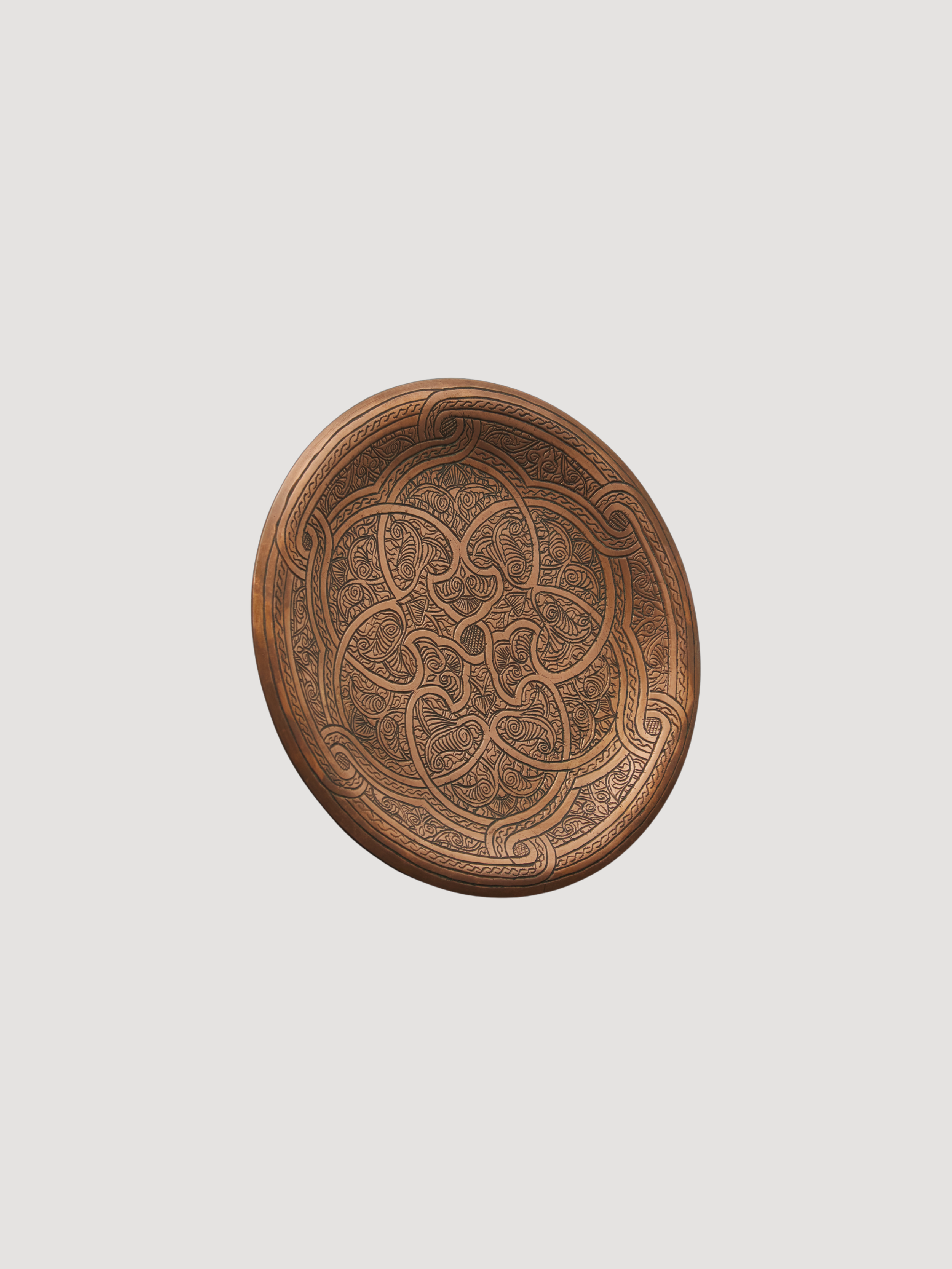
A Mamluk Revival Dish depicting a Six-Pointed Star
In chased and engraved copper, of circular form with a slightly recessed well and a narrow flanged rim.
Cairo, Egypt. Late 19th century.
Diameter: 20 cm (7.87 in)
Additional Information
This dish is a refined product of the 19th-century Cairo workshops, which saw a monumental resurgence of the aesthetic styles from the 14th-century Mamluk Sultanate. During this period, Egyptian master coppersmiths sought to revive the prestige of their ancestors by meticulously recreating the geometric complexity and floral precision of medieval metalwork. These objects were highly sought after by international collectors and intellectuals of the late Ottoman era, representing a golden age of Islamic decorative arts.
The central motif is a cornerstone of Islamic sacred geometry, symbolising the harmony between the celestial and earthly realms. The interlacing bands, which pass over and under one another in a seamless infinite loop, were designed to draw the viewer into a state of contemplation. Executing such mathematical precision on a curved copper surface required a high level of skill, as the artisan had to calculate the proportions manually before beginning the chasing and engraving process.
Provenance
Private Collection, Cairo, Egypt.
A Mamluk Revival Dish depicting a Six-Pointed Star
In chased and engraved copper, of circular form with a slightly recessed well and a narrow flanged rim.
Cairo, Egypt. Late 19th century.
Diameter: 20 cm (7.87 in)
Additional Information
This dish is a refined product of the 19th-century Cairo workshops, which saw a monumental resurgence of the aesthetic styles from the 14th-century Mamluk Sultanate. During this period, Egyptian master coppersmiths sought to revive the prestige of their ancestors by meticulously recreating the geometric complexity and floral precision of medieval metalwork. These objects were highly sought after by international collectors and intellectuals of the late Ottoman era, representing a golden age of Islamic decorative arts.
The central motif is a cornerstone of Islamic sacred geometry, symbolising the harmony between the celestial and earthly realms. The interlacing bands, which pass over and under one another in a seamless infinite loop, were designed to draw the viewer into a state of contemplation. Executing such mathematical precision on a curved copper surface required a high level of skill, as the artisan had to calculate the proportions manually before beginning the chasing and engraving process.
Provenance
Private Collection, Cairo, Egypt.